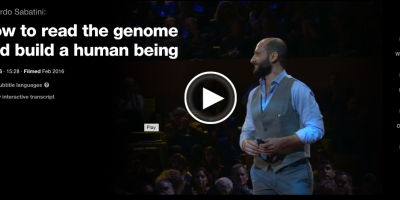
I don’t care how bad or how good your week has been. This video should bring a smile to your face no matter what. It’s a relative oldie, but a goodie…
If that can’t do it, here’s a montage. Good luck resisting their charms!
I don’t care how bad or how good your week has been. This video should bring a smile to your face no matter what. It’s a relative oldie, but a goodie…
If that can’t do it, here’s a montage. Good luck resisting their charms!
Friend Pete Enns’ book, The Evolution of Adam, is now out and being promoted with a blog tour. I’m honored to be a part of it, especially when I look at the other bloggers involved. All next week Brazos will be linking to posts on the book and will also be doing some giveaways which look tempting… so head over to the blog tour website for more information.
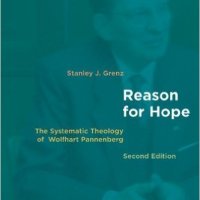
I am currently reading Theology in the Age of Scientific Reasoning by Nancey Murphy, a book that I have been wanting to read for years. I am through the first quarter of the book and so far I am led to believe that this may be one of those books. You know, an absolutely foundational book that makes you ask yourself, “Why has it taken me so long to find this out?” or exclaim after reading it, “I can’t imagine life without it.”
So, it looks like a good book.
For a summary, one need look no further than the preface where Murphy describes her motivations for writing the book.
The philosopher of science must answer the question “In what does the rationality of science consist?” Few besides my teacher Feyerabend would question that science is rational. The philosophy of religion, on the other hand, must in these days provide an apologia for the very possibility of religious knowledge.
Philosophy of science has made great strides in this generation by careful study of science itself – as opposed to arm-chair investigation of the ‘logic’ of science. It seemed to me, therefore, that philosophers of religion needed an equally thorough knowledge of the cognitive aspects of religion…
… I saw that Scripture, history, and the church’s ongoing encounters with God in community life and worship could be the data for a scientific theology. Theology itself (doctrine) could be accounted theories in a theological “research program.” The analysis of the relations between data and theory, and criteria for acceptance of theories, would come from the philosophy of science of the late Imre Lakatos. (p xi-xii)
Let me make it clear from the beginning that I do not believe that for theology to be intellectually acceptable or a worthwhile endeavor that it need to be scientific. Too often, disciplines outside of traditional science want to label their fields as scientific or use scientific terminology or methodology to make their disciplines seem more relevant in today’s scientific climate. I don’t think this is necessary because I believe all disciplines have their own intrinsic value, but then again I teach at a Christian liberal arts college so that is to be expected. However, since I am a scientist and thus think and structure my ideas in the ways of science, Murphy’s approach is very inviting to me, personally.
Should her approach be inviting to more than just me? Should she have a broader audience? I think so, but you tell me. Do you agree with the following paragraph? Do you think what she’s stating is a valid and current problem for theology?
So, to sum up, the theologian’s options, as Stout sees them, are: (1) ignore Hume, with the consequence that theology becomes irrelevant to the segment of the culture that has been affected by Enlightenment thought; or (2) take Hume’s work for granted and either: (a) find some other vindication for theology (moral, aesthetic, existential), with the consequence that theology loses its cognitive content and becomes uninteresting; or (b) redefine terms so that theology has its own peculiar form of ‘rationality’, with the consequence that theology becomes unintelligible to those who operate with the same standard epistemology. (p 14)
Last week, I linked to Antonio Damasio’s TED talk in which he spoke about his theory for how “self comes to mind” to generate consciousness. This week, we get a different picture of consciousness, from Dan Dennett. Dennett has two main points to make in his talk. First, even though you think you’re an expert on your own consciousness, you’re really not. Second, a good amount of the time your consciousness is not only inaccurate, but it is fooling… “you.”
Dennett’s evidence for his argument comes from visual tricks or illusions that show that what you think you’re looking at is not really there. Your brain fills in gaps and plays tricks on you to help make sense out of the limited view you have of reality (in this case, artistic images).
The evidence is quite clear. My favorite example is shown below in two images, the first a view of a painting from afar and the second a closer up view of the same painting. Your brain makes you think that there are people on the bridge from afar, but when you look more closely, it’s just blobs of paint. You “create” people that aren’t really there. We don’t just do this with visual inputs, but also with audio inputs, as anyone who has camped out can attest to! We think there is someone out there when it’s just the wind (or if you’re in Texas, an armadillo).
However, I don’t agree that the inaccuracies presented in the talk can then be extrapolated to say that all of our consciousness is mistaken. It’s one thing to show that processing of relatively complex inputs can be faulty from time to time, it’s another entirely to say that our understanding of consciousness is mistaken or that consciousness is an illusion (which he does not say within this particular talk, but is a logical conclusion). Nevertheless, a very interesting talk and one that should generate a healthy discussion!
Links for the week. Audio from Evanescence, Pink Floyd, and … John Denver?
The news I see fit to print (er, link) to:
Religion:
Science:
The space-between:
Did you guys see the Baby Godfather meme? Some of these are hilarious. Can’t and won’t share all, but below are my favorites…
This week’s TED talk is by Antonio Damasio, a neuroscientist who is most well known for his book, Descartes Error, and his research on the importance of emotions to cognition. In the talk, Damasio describes consciousness as the combination of your mind, which is a flow of mental images, and the self, i.e. your “you.” Consciousness occurs when “self comes to mind” (see screenshot from the talk below), which just happens to be the name of his most recent book, Self Comes to Mind: Constructing the Conscious Brain.
Although it’s a bit dry, I really, really enjoyed this talk and am looking forward to reading the book when my mind catches up to my self! One issue I struggle with when considering monism vs dualism and my current position of non-reductive physicalism (or emergence) is how the self can be maintained when the material within our bodies is constantly turned over and made new. Damasio poses in this talk that it’s the connections between the body, brainstem, and cerebral cortex that constitues self and that his model explains why some self-like behavior is observed in animals.
Great and informative talk. Enjoy!
On the blog, we’ve laughed, we’ve cried. And we’ve been blown away by the greatest science vs wonder exposition in the history of science vs. wonder expositions. And I’ve grappled with the fact that classes start this week and I didn’t get enough done yet again, on the blog or in course preparations.
But what’s new.
That didn’t stand in the way of others though as there are lots of good links this week that I enjoyed. I hope you do too. Musical accompaniment in 1 2 3.
All the “news” I see fit to print (er, link to), i.e. items that don’t go in other categories:
Science:
The space between:
Walking along the high tide line. Watching the pacific from the sidelines.
Wonder what it means to live together? Looking for more than just guidelines.
Looking for signs in the night sky. Wishing that I wasn’t such a nice guy.
Wonder what it means to live forever? Wonder what it means to die?
I know that there’s a meaning to it all. A little resurrection every time I fall.
You got your babies, I got my hearses. Every blessing comes with a set of curses.
I got my vices, I got my vice verses. I got my vice verses.
The wind could be my new obsession. The wind could be my new depression.
The wind goes anywhere it wants to. Wishing that I learned my lesson.
The ocean sounds like a garage band. Coming at me like a drunk man.
The ocean tells me a thousand stories. None of them are lies.
I know that there’s a meaning to it all. A little resurrection every time I fall.
You got your babies, I got my hearses. Every blessing comes with a set of curses.
I got my vices, I got my vice verses. I got my vice verses.
Let the pacific laugh. Be on my epitaph.
With it’s rising and falling. And after all, it’s just water.
And I am just soul. With a body of water and bones. Water and bones.
Where is God in the night sky? Where is God in the city light?
Where is God in the earthquake? Where is God in the genocide?
Where are you in my broken heart? Everything seems to fall apart. Everything feels rusted over. Tell me that you’re there.
I know that there’s a meaning to it all.
A little resurrection every time I fall.
You got your babies, I got my hearses.
Every blessing comes with a set of curses.
I got my vices, I got my vice verses.
These are my vice verses.
These are my vice verses. Yeah. These are my vice verses.